

02 Jun Fabrication-Only vs. Turnkey Metals: Which Is Right for Your Project?
If you’re a general contractor managing a commercial project with an architectural metals scope — storefronts, column covers, ceilings, wall panels, copings, fascias — you’ve probably had to make this call at some point: do you hire a fabricator to make the pieces and manage the installation yourself, or do you bring in a turnkey metals contractor who handles everything from shop drawings through the final screw?
Both approaches work. Neither is automatically right. The correct answer depends on your project, your team, your schedule, and how much bandwidth you have to manage the metals scope yourself. Here’s a straightforward breakdown to help you think it through.
What “Fabrication-Only” Actually Means
In a fabrication-only arrangement, the general contractor purchases custom-fabricated metal components from a shop and then takes responsibility for everything else: coordinating the installation sub, managing the field schedule, reviewing shop drawings, and handling any field issues that come up during installation.
This model works well when:
You have a reliable installation sub already in place. If you’ve got a glazing contractor or specialty metals installer you trust — someone who knows how to read shop drawings, work to tight tolerances, and handle field conditions — fabrication-only can be a clean, efficient approach. You’re essentially buying a product and managing the labor separately.
The scope is straightforward. Copings, fascias, simple column covers, standard brake shapes — these are the kinds of items where fabrication-only tends to be efficient. The field execution isn’t particularly complex, and there’s no reason to pay a premium for turnkey coordination on a job that a competent glazier can run in their sleep.
You want direct control over the installation schedule. When you’re managing your own installation sub, you set the sequence. You decide when the metals crew is on site and how they integrate with the rest of the trades. For GCs who are detail-oriented about scheduling, this kind of control has real value.
The trade-off: you own more of the risk. If the fabricated pieces don’t fit the field condition, you’re the one making the phone calls and paying for modifications. If the installation sub has a problem, you’re coordinating the resolution. The fabricator’s job ends when the material ships.
What “Turnkey” Means in the Metals World
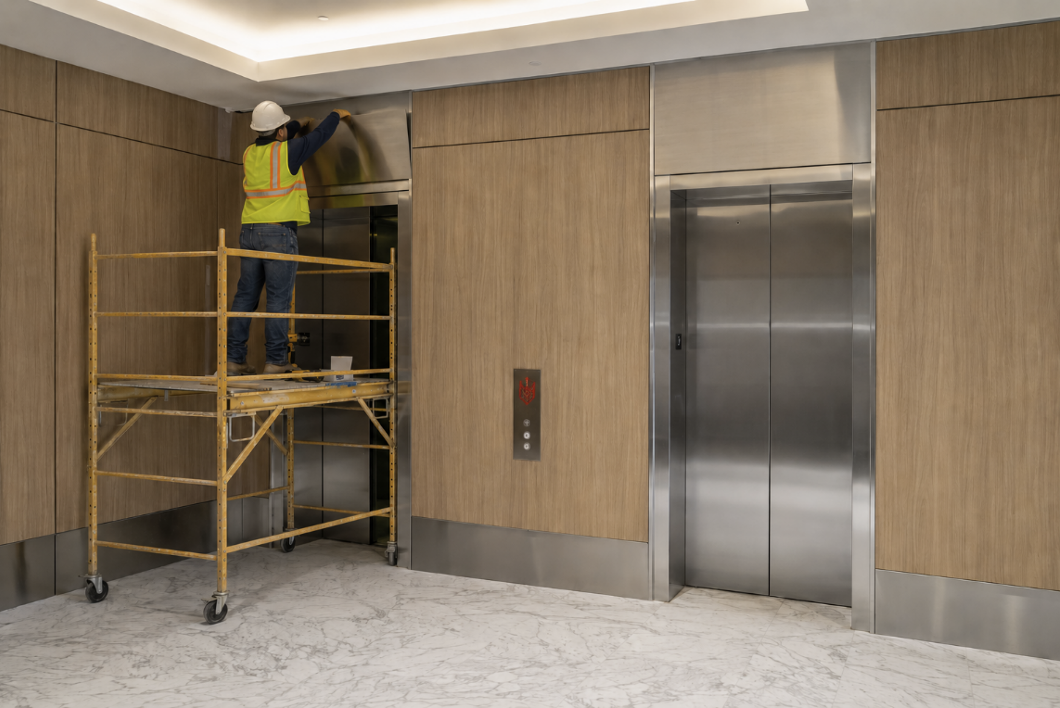
A turnkey metals contractor handles the complete scope: shop drawings, fabrication, delivery, and installation. You issue one contract, you get one point of contact, and when the job is done, the metal is on the wall.
This model works well when:
The scope is complex or high-profile. Intricate ceiling systems, custom wall panels with tight tolerances, multi-material assemblies, or any situation where the design intent is hard to execute — these are cases where having one entity responsible for both the fabrication and the installation reduces the risk of finger-pointing between trades. When the same team that built the pieces installs them, they’re invested in making sure everything fits.
You don’t have a metal installation sub in your Rolodex. Not every GC has a deep bench of specialty subcontractors. If you don’t have a glazier or metal installer you know and trust for a particular scope, finding one, vetting them, and managing them is work. A turnkey metal contractor eliminates that step.
Your schedule is tight. Turnkey eliminates the coordination handoff between fabricator and installer. The shop drawings, the fabrication, and the field schedule are all managed by the same team. That tends to mean fewer gaps and faster resolution when field conditions create surprises.
You’re building a relationship for the long term. A turnkey metals contractor who performs well becomes a valuable part of your subcontractor ecosystem. Over time, that relationship pays dividends in responsiveness, scheduling flexibility, and the kind of problem-solving that only happens when both parties trust each other.
The trade-off: turnkey typically costs more than fabrication-only, because you’re paying for coordination and installation expertise in addition to the metal itself. For some scopes, that premium is well worth it. For others, it’s overhead you don’t need.
The Question Isn’t Always Either/Or
It’s worth noting that many GCs use both models on the same project — or even with the same fabricator. The storefront framing might go out as a turnkey scope, while the brake metal for the glazing contractor gets ordered fabrication-only. The finished metal ceiling in the lobby gets turnkey treatment, while the standard copings on the roof get bought and installed separately.
The right answer is always the one that matches the scope, the team, and the schedule — not the one that follows a template.
How Astro Sheet Metal Approaches Both
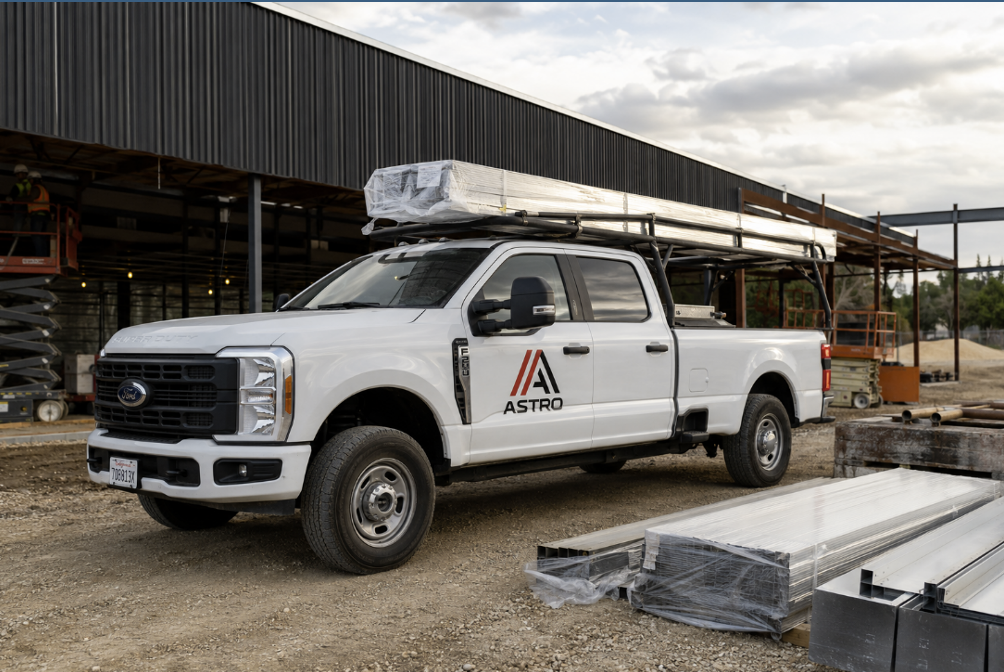
Astro Sheet Metal has been serving construction customers in the Dallas-Fort Worth and Austin markets since 1967, and they offer both fabrication-only and turnkey services. For fabrication-only work, parts can be picked up at our shop in Grand Prairie, or parts can be delivered either toyour shop or directly to the job site. For turnkey work, Astro’s team manages site visits, field measurement, submittal and shop drawings, fabrication, and field installation as a single package.
That mix means Astro can work with customers either way and can help you think through which approach makes the most sense for a specific scope. If you’ve got a project with an architectural metals component and you’re not sure how to structure it, reach out at astrosheetmetal.com/contact — that’s exactly the kind of conversation worth having early, before the bid goes out.
Astro Sheet Metal Co., Inc. has been fabricating custom architectural metals in Grand Prairie, Texas since 1967. We serve glazing contractors, curtainwall subcontractors, general contractors, architects, and property owners across the Dallas-Fort Worth and Austin markets.
There’s nothing more frustrating on a job site than finding that the brake metal you ordered is built incorrectly!