

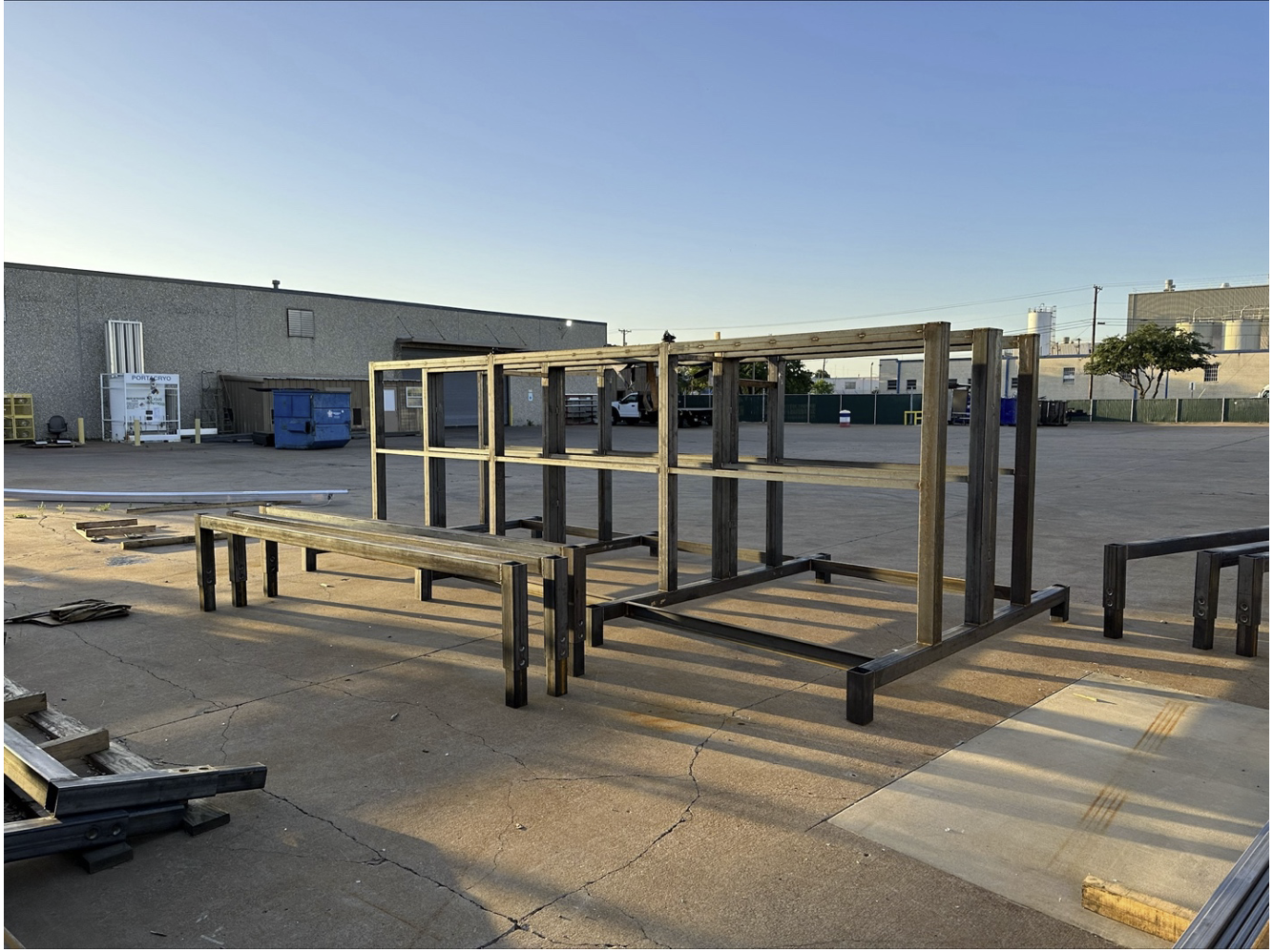
02 Oct Why Working with a Grand Prairie Fabricator Simplifies DFW Jobsite Logistics
Dallas-Fort Worth is one construction market, but it does not always operate like one small geographic area.
A project in downtown Dallas may require coordination with a glazing contractor based in Carrollton, a general contractor headquartered in Fort Worth, and installers traveling between jobs in Frisco, Arlington and Irving. Add traffic, restricted delivery hours, limited staging areas and shifting schedules, and moving a relatively straightforward metal order across the Metroplex can become a project of its own.
That is one reason a centrally located fabrication partner can be valuable.
Astro Sheet Metal operates its fabrication shop in Grand Prairie, between Dallas and Fort Worth and within practical reach of construction activity throughout the Metroplex. Customers can pick up fabrication-only orders from the shop, arrange delivery to their own facility, or have material delivered directly to a jobsite.
Location alone does not guarantee good service. Accuracy, communication and shop capacity still matter. However, when those qualities are combined with proximity to the work, contractors have more options when schedules change, and field conditions create surprises.
The Metroplex Creates a Delivery Challenge
North Texas construction activity is spread across a large area.
Commercial projects are active not only in central Dallas and Fort Worth, but also in Arlington, Irving, Frisco, McKinney, Denton and other growing communities. Astro’s existing market discussion describes strong demand across this wide geographic area, with healthcare, hospitality, mixed-use and commercial construction all active at the same time.
For a subcontractor managing several jobs, that geographic spread can create practical problems.
A crew may need brake metal in Dallas on Tuesday, replacement trim in Fort Worth on Wednesday, and additional pieces for a project in Frisco before the end of the week. Material coming from a distant supplier may be tied to freight schedules that do not reflect what is happening in the field.
A local fabrication relationship provides alternatives. Depending on the order and the fabricator’s capacity, material may be picked up by the installing contractor, sent with a local delivery, or routed directly to the project.
That flexibility can help keep a relatively small metal need from becoming a larger scheduling issue.
Pickup Can Be the Fastest Option
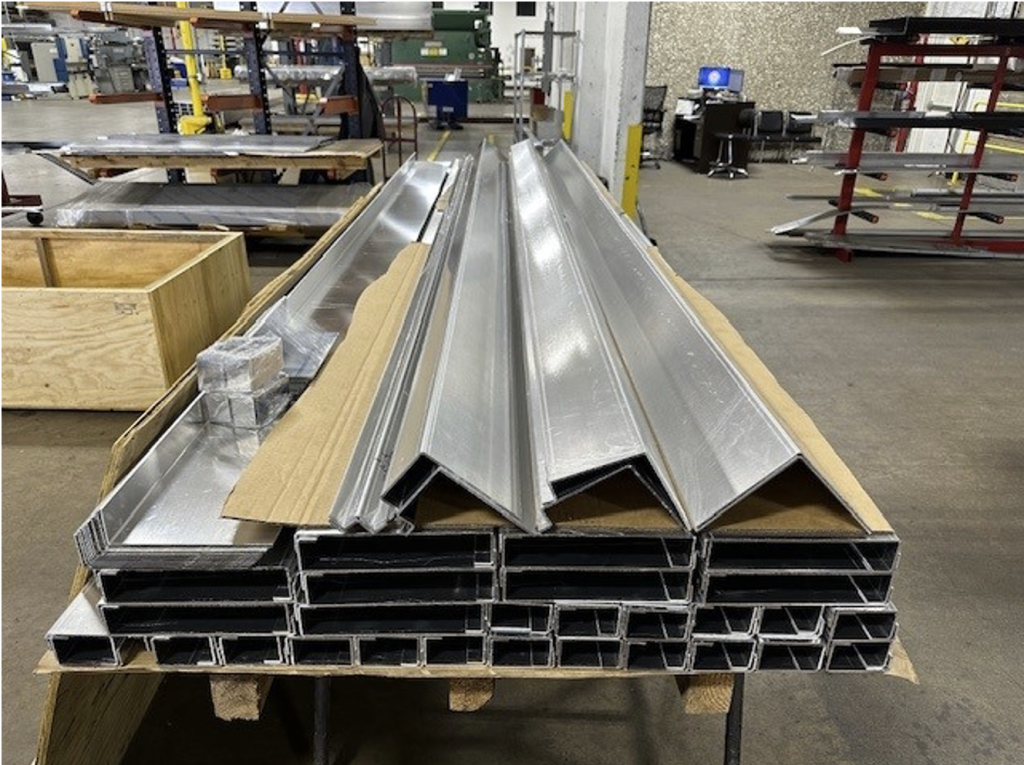
For fabrication-only orders, shop pickup is sometimes the simplest solution.
A glazing, waterproofing or millwork contractor may already have a crew traveling through the area. Rather than waiting for a freight carrier or coordinating a separate jobsite delivery, the contractor can arrange to collect the completed material from the fabricator.
Pickup can be especially useful for:
- Small brake metal orders
- Replacement pieces
- Punch-list items
- Material needed for a crew already in the field
- Orders going to a contractor’s own shop for assembly
- Components that require immediate inspection before installation
Pickup also creates an opportunity to confirm the order before the material travels farther. The customer can check quantities, finish orientation, labeling and general condition while still at the fabrication shop.
That does not replace the fabricator’s quality-control process, but it can provide another useful checkpoint on a time-sensitive order.
Direct-to-Jobsite Delivery Reduces Handling
Pickup is not practical for every order.
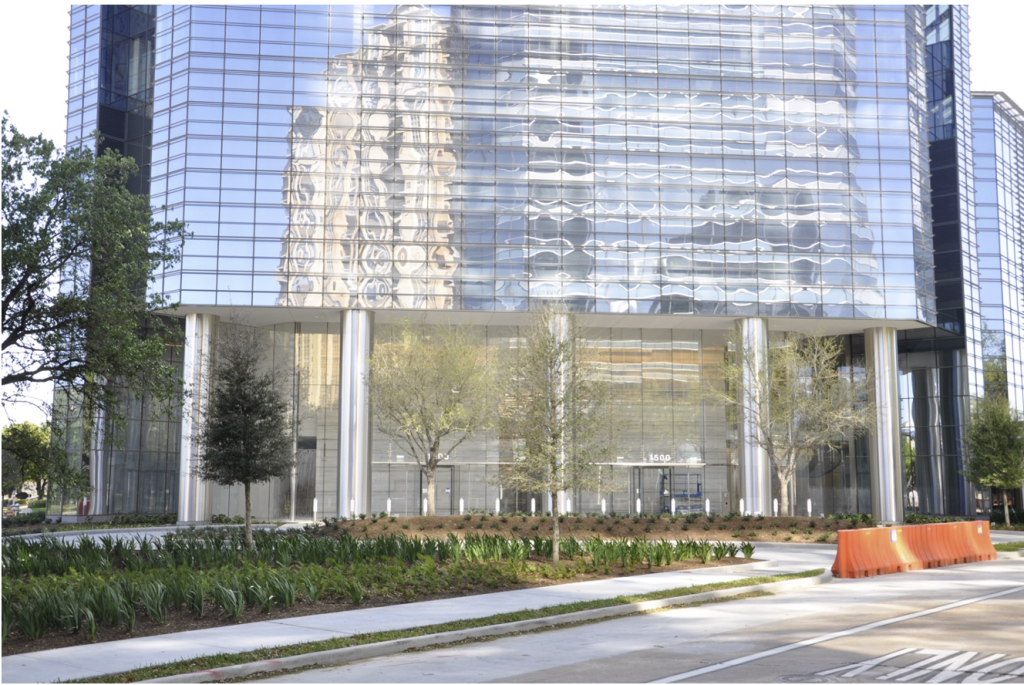
Large bundles, finished panels, and complex assemblies may require appropriate vehicles, protection, and unloading plans. In those situations, delivery directly to the jobsite can reduce the number of times the material is handled.
Every additional move creates another opportunity for pieces to be scratched, bent, separated from their labels, or placed in the wrong storage area.
Direct delivery to the jobsite can eliminate the need to:
- Ship the order to the subcontractor’s facility.
- Unload and store it.
- Reload it onto another truck.
- Transport it to the project.
- Unload and stage it again.
Reducing that sequence can save labor and lower the risk of damage. It can also help the contractor avoid using its own trucks and employees for transportation when those resources are needed elsewhere.
Delivery still needs to be coordinated carefully. Architectural metal should arrive when the site is ready to receive it, not simply when fabrication is complete.
Jobsite Readiness Matters
A local delivery does not help if the material reaches a project with nowhere safe to go.
Architectural metal may be vulnerable to dents, scratches, moisture exposure, and damage from other trades. Material that arrives weeks before installation can be moved repeatedly, stacked beneath unrelated products or stored in areas that later need to be cleared.
Astro’s existing scheduling guidance recommends coordinating delivery and staging with the installation sequence. Custom pieces should be bundled, labeled, and palletized so the field crew can identify what is needed without unpacking the entire order.
Before delivery, the project team should confirm:
- The correct entrance and delivery route
- Permitted delivery hours
- Where the truck can unload
- Whether a forklift or other equipment will be available
- Who will receive and sign for the material
- Where the order will be stored
- Whether the installation area is actually ready
- How pieces should be separated by elevation, floor, or phase
These details may sound minor, but they can determine whether a delivery takes 30 minutes or several hours.
Local Field Verification Can Prevent Remakes
Some architectural metal should not be fabricated from assumed dimensions.
Renovations, irregular substrates, existing construction, and transitions between trades frequently require field measurement. Even on new construction, completed openings and wall conditions may differ from the dimensions shown in the original design documents.
Architectural metal is often installed late in the project and must accommodate tolerances of framing, glazing, masonry, drywall, and other preceding work. Astro’s coordination guidance notes that dimensions contractors were instructed to hold do not always match what was ultimately built.
A nearby fabricator can more readily arrange a site visit when field verification is part of the scope.
That can be valuable for:
- Existing-building renovations
- Column covers
- Custom wall panels
- Irregular copings and fascias
- Storefront transitions
- Millwork cladding
- Feature walls
- Equipment enclosures
- Conditions involving several intersecting trades
The objective is not simply to make a trip to the jobsite. It is to gather reliable information before material is cut.
One measurement visit can cost far less than remaking finished pieces that do not fit.
Rush Orders Depend on More Than Distance
Proximity can improve response time, but it does not make every rush request possible.
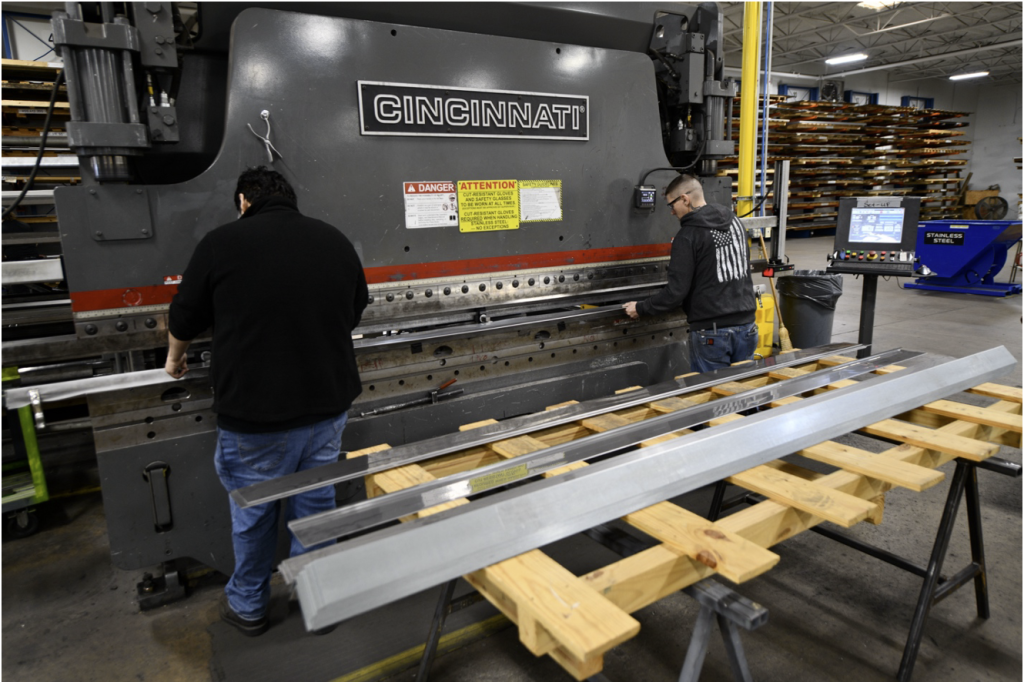
The fabricator still needs complete order information, the correct material, available shop capacity, and enough time to form the requested profile accurately. Specialty finishes and unusual gauges may be controlled by outside supplier lead times.
Astro’s Grand Prairie shop maintains an inventory of commonly used materials to improve its ability to respond when job schedules shift. Rush brake metal orders are a regular part of its work for glazing, drywall, waterproofing, millwork and general contracting customers.
A contractor can improve the chances of a fast turnaround by providing:
- Complete dimensions
- A clear profile sketch
- Material type and gauge
- Finish and exposed-face orientation
- Quantities
- The actual required date
- Delivery or pickup instructions
- Photographs of unusual field conditions
A local shop cannot eliminate missing information. A rush order that requires several rounds of clarification is not truly moving quickly.
Replacement Pieces Are Easier to Manage Locally
Even well-planned projects sometimes require additional material.
A component may be damaged during installation. Field conditions may require a modified profile. The owner may add work during the punch-list phase, or a quantity may have been missed in the original order.
When the fabricator is located nearby, the replacement process can be simpler.
The contractor can bring an existing piece or physical template to the shop. A fabricator can inspect the item directly instead of interpreting photographs and descriptions from a distance. Once completed, the replacement may be picked up or delivered without entering a long-distance shipping network.
This can be especially important near the end of a project, when one missing piece may be holding up inspections, closeout, or an owner walkthrough.
The cost of an incorrect or delayed brake metal order extends beyond the replacement invoice. It can create idle crew time, rescheduling, and downstream delays for the trades that follow.
Local Relationships Become More Valuable Over Time
The greatest advantage of a nearby fabricator may not be a single delivery or rush order. It may be the working relationship that develops over repeated projects.
A fabricator who regularly processes a contractor’s orders becomes familiar with that contractor’s preferred materials, common profiles, ordering process, and expectations. The contractor, in turn, learns what information the shop needs to produce an accurate order.
That familiarity can reduce repeated explanations and make unusual requests easier to evaluate.
Astro’s guidance on rush fabrication notes that established customers are often easier to accommodate because the fabricator already understands how they operate and has successfully processed previous orders for them.
The relationship does not eliminate the need for documentation. Every order should still clearly identify dimensions, material, finish, and quantity. It does create a more efficient foundation for communication when time is limited.
Fabrication-Only and Turnkey Options
Different projects require different levels of support.
A contractor with its own experienced installers may need only accurately fabricated components. In that case, Astro can provide fabrication-only work for pickup, delivery to the customer’s shop, or delivery directly to the project.
A more complex scope may require a turnkey approach that includes:
- Site visits
- Field measurement
- Submittal and shop drawings
- Material procurement
- Fabrication
- Delivery
- Installation
Keeping those responsibilities with one contractor can reduce handoffs and simplify communication when the metalwork involves unusual geometry, demanding finishes or coordination with multiple trades.
The correct model depends on the scope, schedule, and capabilities of the project team
A Practical DFW Advantage
Working with a Grand Prairie fabricator will not make Dallas-Fort Worth traffic disappear, prevent every schedule change or turn every custom order into same-day work.
It can, however, reduce some of the logistical friction.
Customers have practical pickup and delivery options. Site visits and field verification are more manageable. Replacement pieces do not need to travel across the country. Contractors can speak directly with the people producing their material and build a working relationship over time.
Astro Sheet Metal has fabricated custom architectural metals in Grand Prairie since 1967. The company serves glazing contractors, curtainwall subcontractors, millworkers, general contractors, architects, and property owners throughout the Dallas-Fort Worth and Austin markets.
For contractors managing projects across a large and busy Metroplex, having an experienced fabrication partner near the center of the market can make a complicated job a little easier to control.
For assistance with fabrication-only or turnkey architectural metalwork, contact Astro Sheet Metal at 972-438-1110 or visit astrosheetmetal.com/contact.