

04 May The Rise of Metal in Modern Commercial Interiors
Metal has become one of the most defining materials in modern commercial interior design. Once reserved primarily for structural or industrial applications, architectural metals are now front and center in offices, retail environments, hospitality spaces, and mixed-use developments.
Why Designers Are Choosing Metal
Today’s designers are drawn to metal for a combination of aesthetics, performance, and flexibility:
- Clean, contemporary appearance that complements modern architecture
- Durability in high-traffic environments
- Versatility across finishes, textures, and colors
- Compatibility with glass, wood, and stone
From brushed stainless steel to powder-coated aluminum, metal adapts to nearly any design vision.
Where Metal Is Showing Up
Architectural metal is being used throughout commercial interiors in ways that go far beyond traditional applications:
- Wall panels and feature walls
- Ceiling systems and soffits
- Column covers and trim details
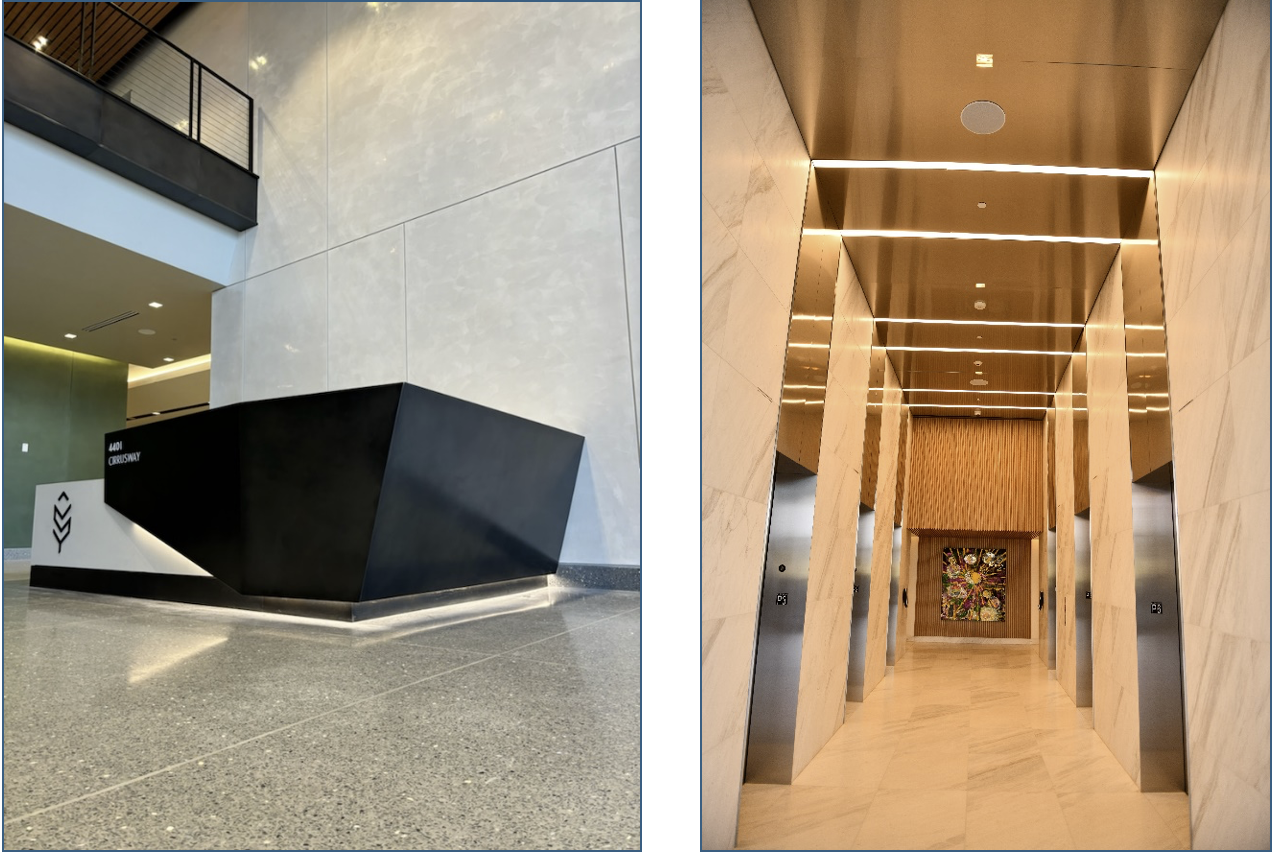
- Elevator surrounds and lobby accents
- Reception desks and millwork integration
These elements allow designers to create cohesive, high-end environments with long-lasting performance.
Performance Meets Design
In commercial settings, materials must do more than look good—they must perform. Metal offers:
- Impact resistance in high-traffic areas
- Fire resistance compared to many alternative materials
- Ease of maintenance and cleaning
- Longevity with minimal degradation over time
This makes it especially valuable in environments like healthcare, corporate offices, and public buildings.
The Role of Custom Fabrication
Off-the-shelf solutions rarely achieve the level of precision and design intent required in modern interiors. Custom fabrication allows for:
- Exact fit and alignment with architectural plans
- Integration with lighting, HVAC, and other systems
- Unique geometries and branding elements
As commercial interiors continue to evolve, metal will remain a key material driving both innovation and performance.