

28 Aug DFW Airport Expansion and the Architectural Metals Behind Modern Terminals
Anyone who has driven through Dallas Fort Worth International Airport lately knows that DFW is in the middle of a major transformation.
The airport’s DFW Forward capital improvement program has grown to approximately $12 billion, with work extending across terminals, roadways, parking facilities, airfield systems and customer spaces. In June 2026, DFW opened nine new and rebuilt gates in Terminal C as part of a complete reconstruction of the airport’s busiest terminal. Meanwhile, construction continues on Terminal F, an approximately $4 billion project planned to ultimately provide 31 gates, expanded international capabilities and a direct walking connection to Terminal D.
Projects of this scale are impressive because of their size. But they are also worth examining in detail.
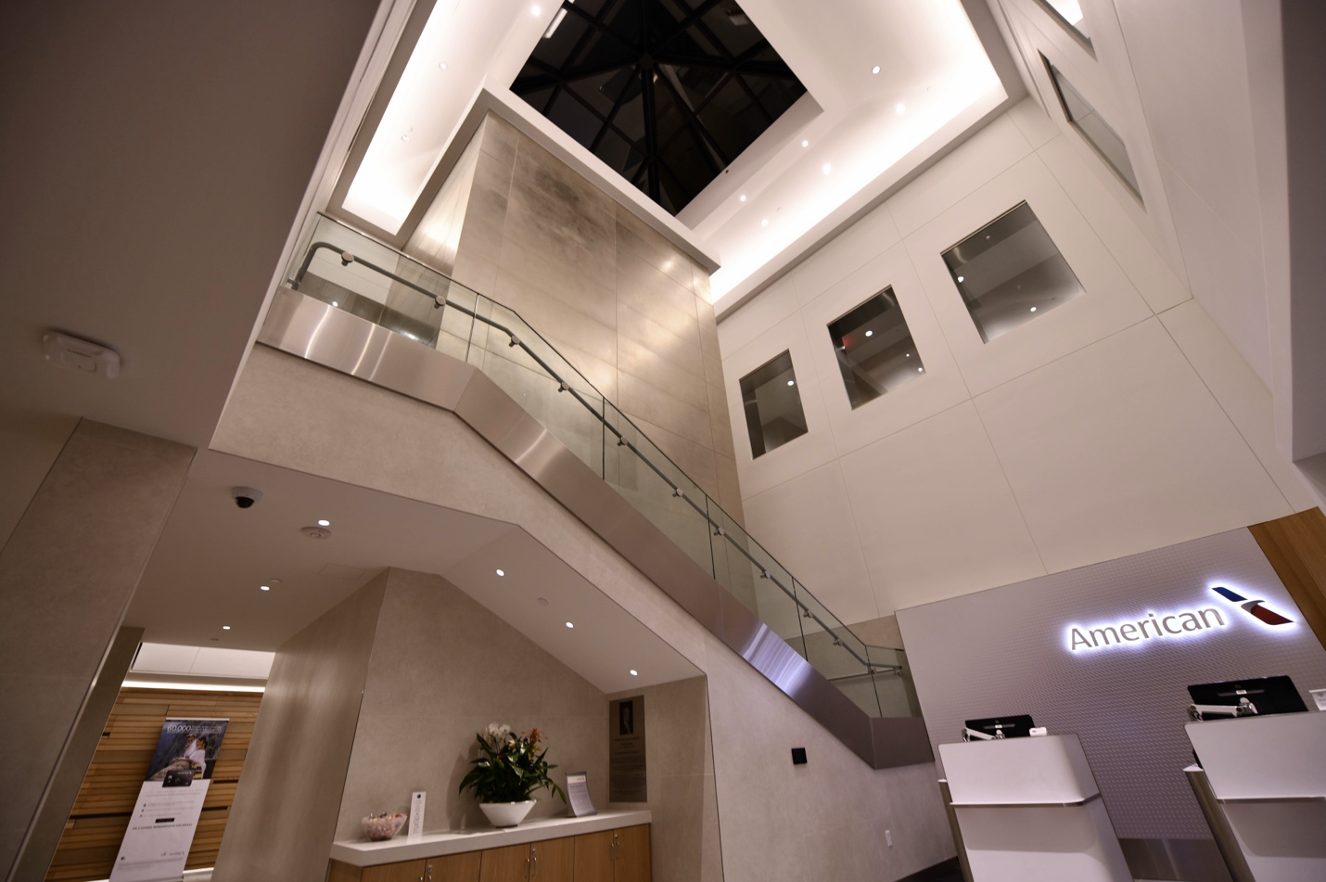
Modern airport terminals depend on hundreds of architectural elements that most travelers will never consciously notice. Metal wall panels, column covers, ceiling systems, trim, equipment screens, corner guards, copings and other custom-fabricated components help transform an enormous structure into a finished public space.
Architectural Metal Is Everywhere in an Airport
When people think about airport construction, they tend to picture runways, baggage systems, passenger bridges and structural steel. Those are certainly important, but architectural metal plays a different role.
It is often the material that passengers actually see and touch.
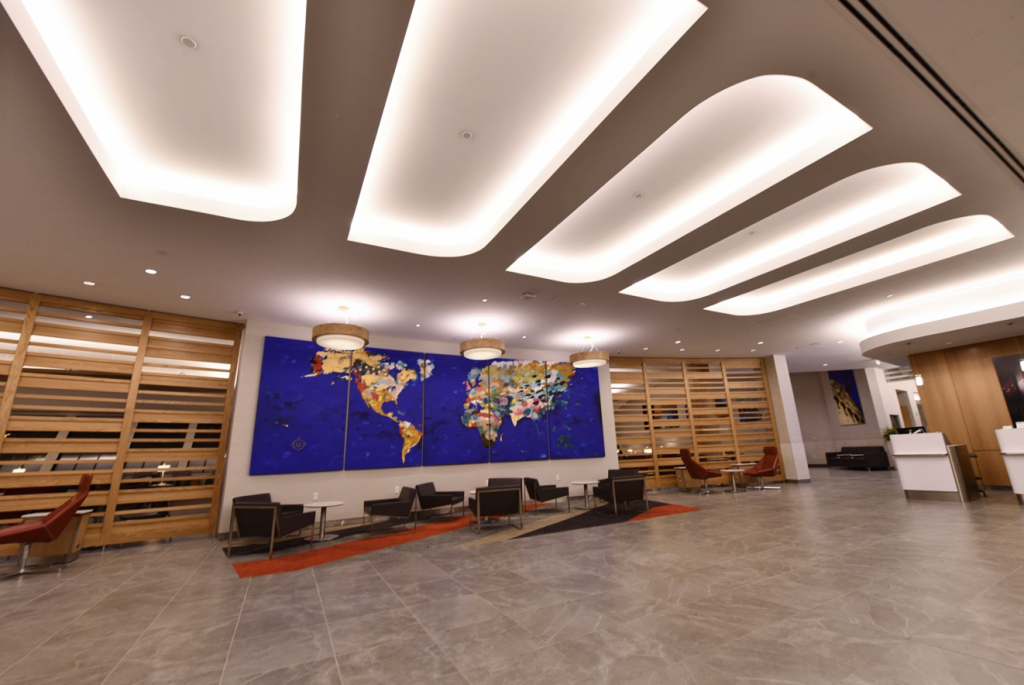
Inside a terminal, architectural metals may appear as:
- Column covers
- Wall and feature panels
- Ceiling panels and soffits
- Elevator and escalator surrounds
- Ticket-counter and millwork trim
- Baggage-claim cladding
- Corner guards and wall protection
- Decorative screens
- Custom shelving and fronts for airport bar and restaurant areas
- Interior signage surrounds
- Custom transition pieces between materials
Exterior applications can include metal wall panels, fascias, copings, flashings, louvers, canopies and equipment screens.
Each component may seem like a relatively small part of a multibillion-dollar project. Put together, however, they establish much of the terminal’s visual character and help the building withstand years of continuous use.
Airport Materials Have to Work Hard
An airport is one of the most demanding environments in commercial construction.
Unlike an office building that empties at the end of the workday, a major airport operates nearly around the clock. Walls, columns, and public areas are continually exposed to luggage carts, maintenance equipment, cleaning crews, delivery traffic, and millions of passengers.
That makes durability more than a specification requirement. It is a long-term operating concern.
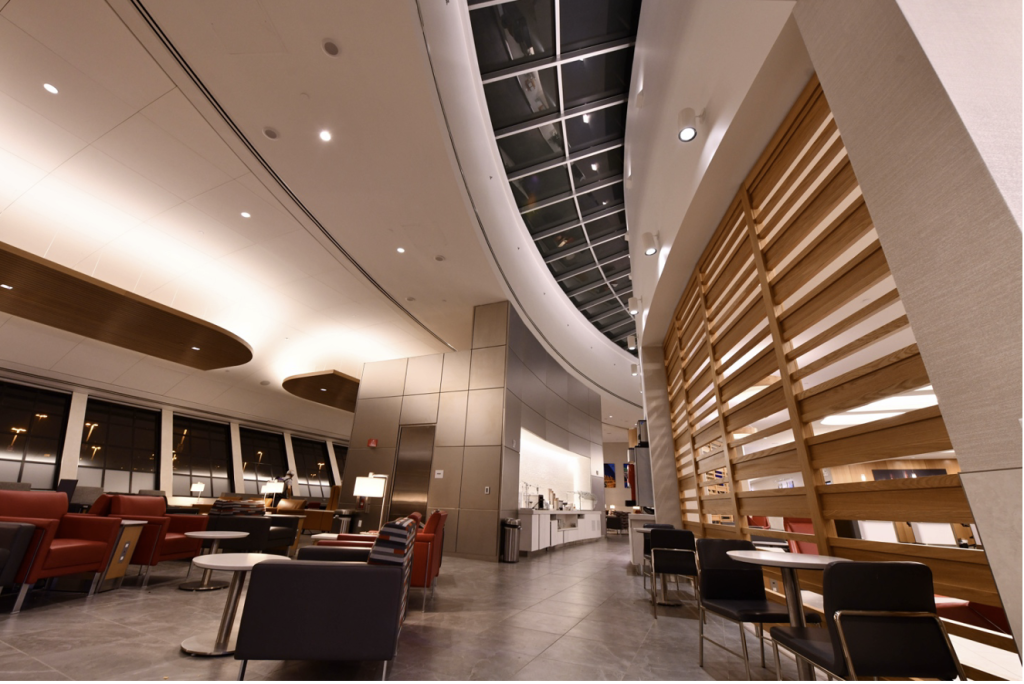
Stainless steel and aluminum are frequently chosen for public-facing applications because they combine durability with a clean, modern appearance. Depending on the application, metals can also be brushed, polished, painted, powder-coated or otherwise finished to complement surrounding glass, stone, wood and architectural materials.
Custom metal corner guards and wall guards are particularly useful in high-impact areas. Fabrication allows the material gauge, dimensions, profile and finish to be matched to the actual condition rather than forcing a standard catalog product into a space it was not designed to fit.
Large Spaces Magnify Small Inconsistencies
A slight difference in finish or alignment may not be particularly noticeable on one small panel. Repeat that difference across a long concourse, however, and it becomes obvious.
Large transportation projects demand consistency across hundreds of components. Grain direction must remain uniform. Panel joints must align. Reveals need to maintain their width. Adjacent materials must meet cleanly, and replacement pieces need to match the work already installed.
Panelization is therefore one of the most important early decisions.
Large walls and ceiling areas must be divided into pieces that can be fabricated, transported and installed without sacrificing the design intent. Proper planning can minimize visible seams, maintain alignment and create a more efficient installation sequence. Finish batches and grain direction also need to be coordinated so the completed surface reads as one installation rather than a collection of individual parts.
Coordination Is as Important as Fabrication
Architectural metals are rarely installed in isolation.
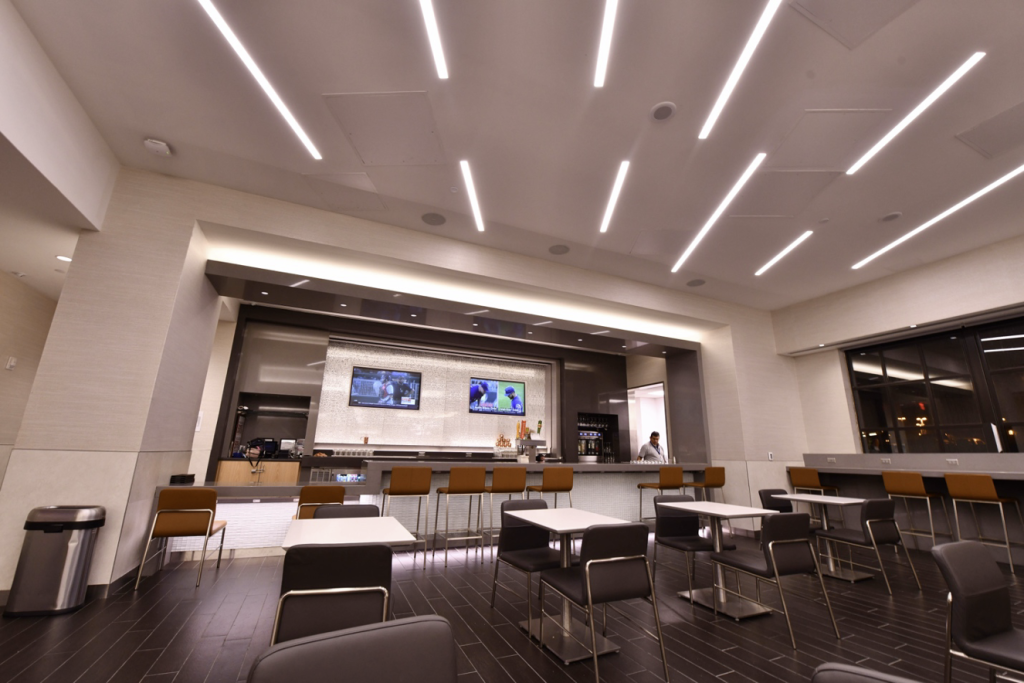
At an airport, metalwork may intersect with glazing, millwork, drywall, flooring, lighting, electrical systems, mechanical equipment, digital displays, signage and security infrastructure. A panel that appears straightforward on an architectural elevation may need to accommodate access doors, outlets, lighting components, speakers, cameras or ventilation openings.
This is why early coordination matters.
Detailed shop drawings translate the architect’s design into fabrication-ready dimensions, profiles, gauges, finishes and attachment details. They also give the project team an opportunity to identify conflicts before material reaches the shop.
Field verification is equally important. Architectural metal installers are often among the final trades working in an area and may have to absorb the accumulated tolerances of everything installed before them. Dimensions that were supposed to be “held to” do not always match the completed condition. Allowing the fabricator to field-measure can prevent gaps, poor alignment and costly remakes.
Modular Construction Changes the Sequence
DFW has used modular construction extensively in its current terminal projects.
Six prefabricated modules were moved into place for the Terminal C pier expansion, with mechanical, electrical, plumbing and fire-protection systems installed before the structures were transported across the airfield. Terminal F pushed the approach even further: its largest module measured 278 feet long, 136 feet wide and weighed 3,320 tons.
Modular construction can reduce disruption at an active airport, but it also increases the need for accurate coordination.
When major assemblies are being constructed away from their final location, openings, attachment points and interfaces must be established correctly in advance. There is less room for field improvisation once a massive completed module has been moved across an airfield and set onto its foundation.
For architectural metal subcontractors, that means approved drawings, reliable dimensions and communication with adjacent trades become even more important.
Installation Logistics Matter
Getting finished metal to the jobsite is only part of the challenge. It also needs to arrive in the correct order, properly protected and ready for installation.
Custom panels and brake shapes are commonly bundled, labeled, and palletized according to the installation sequence. Material that arrives too early may be moved repeatedly, buried behind other products, or damaged while waiting for the area to become available.
A well-planned delivery gives the installation crew what it needs without filling a constrained work area with material that will not be installed for several weeks.
This consideration becomes especially important at an airport, where deliveries may be subject to restricted routes, security requirements, limited staging areas and narrow work windows.
What DFW’s Expansion Means for North Texas Fabricators
DFW Airport’s growth is one highly visible example of what is happening across North Texas.
Major transportation, hospitality, healthcare, corporate and mixed-use projects are being constructed throughout the region. These buildings increasingly use architectural metals not simply as protection or trim, but as central parts of the design.
That creates opportunities for fabricators capable of producing both straightforward brake metal and complex custom assemblies. It also raises expectations. Contractors need partners who can review drawings, ask the right questions, communicate realistic lead times and produce accurately when schedules become compressed.
Astro Sheet Metal has fabricated custom architectural metals in Grand Prairie since 1967. Astro provides fabrication-only services for brake metal, custom shapes and sheet-metal components, as well as turnkey packages that can include site visits, field measurement, shop drawings, fabrication, delivery and installation.
As DFW Airport and the surrounding region continue to grow, architectural metals will remain an important part of how North Texas buildings look, perform and hold up over time.
For assistance with an upcoming architectural metals project in the Dallas-Fort Worth or Austin market, contact Astro Sheet Metal at 972-438-1110 or visit astrosheetmetal.com/contact.